
How an artwork is born
I do not follow a fixed or repetitive method: my way of painting proceeds in periods, at intervals, in resumptions, sometimes simultaneously. The same elements — oil, acrylic, brush, palette knife, and sometimes added materials such as cement or sand — alternate without a set order. Color too follows the same free path, without one being able to speak of distinct phases or periods.
The artworks are born from spontaneous visions, photographs, dreams, memories, or from a sudden idea.
When I use a lot of color, often in several layers, it is to give body to a presence in the matter — to convey, beyond the image, the signal I have caught.
Genziana Pompei
Layer after layer
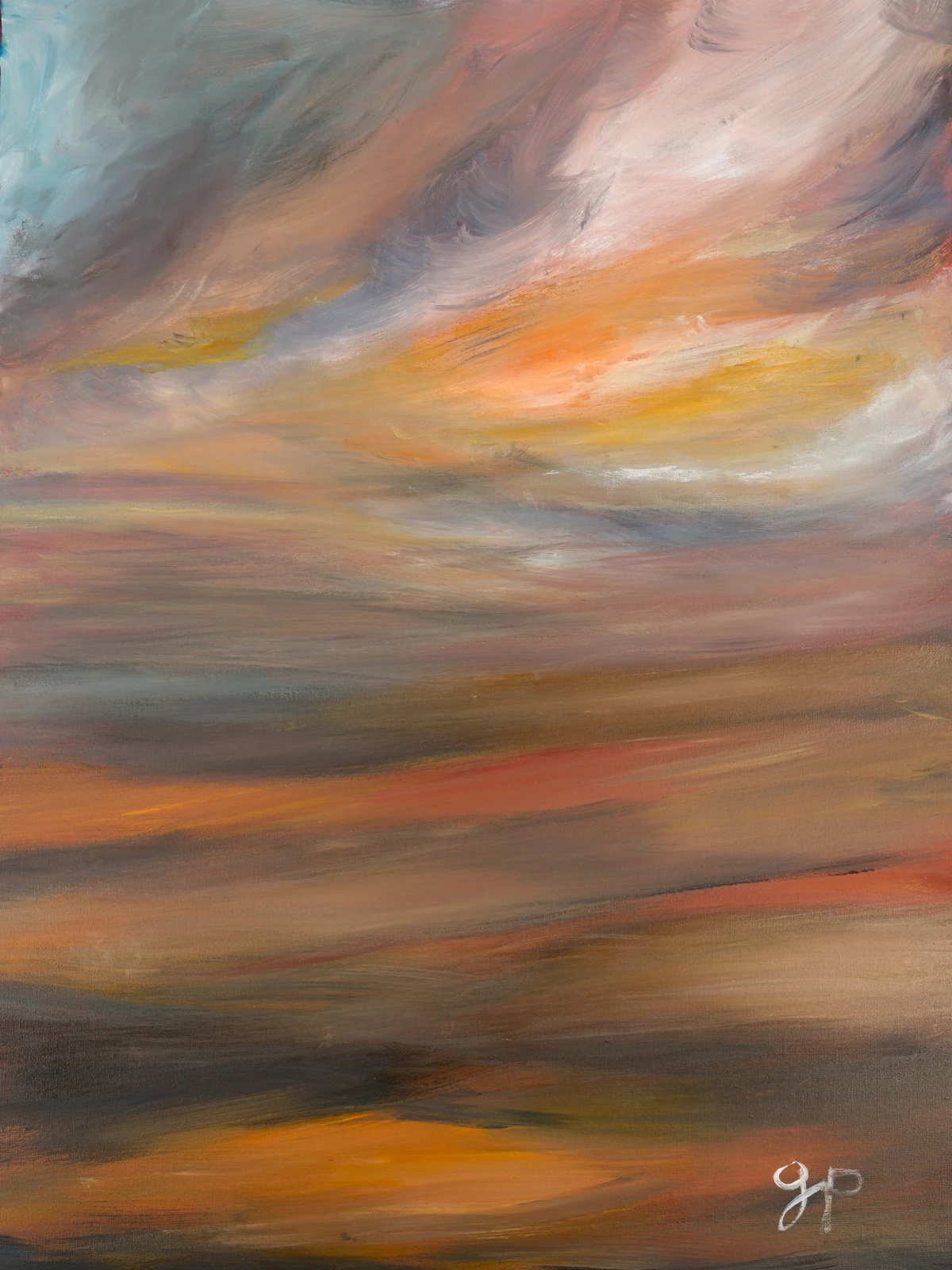
The original paintings
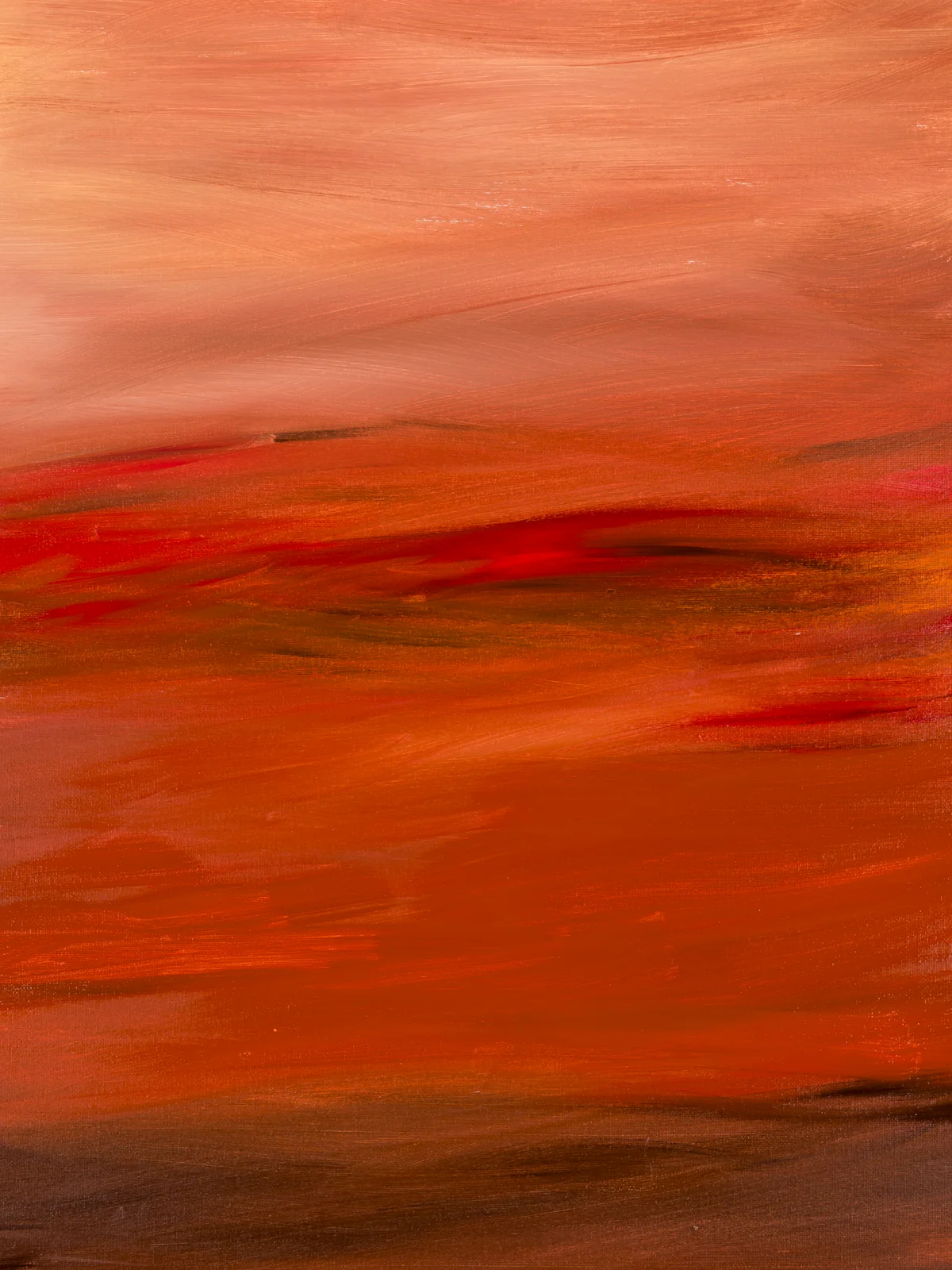
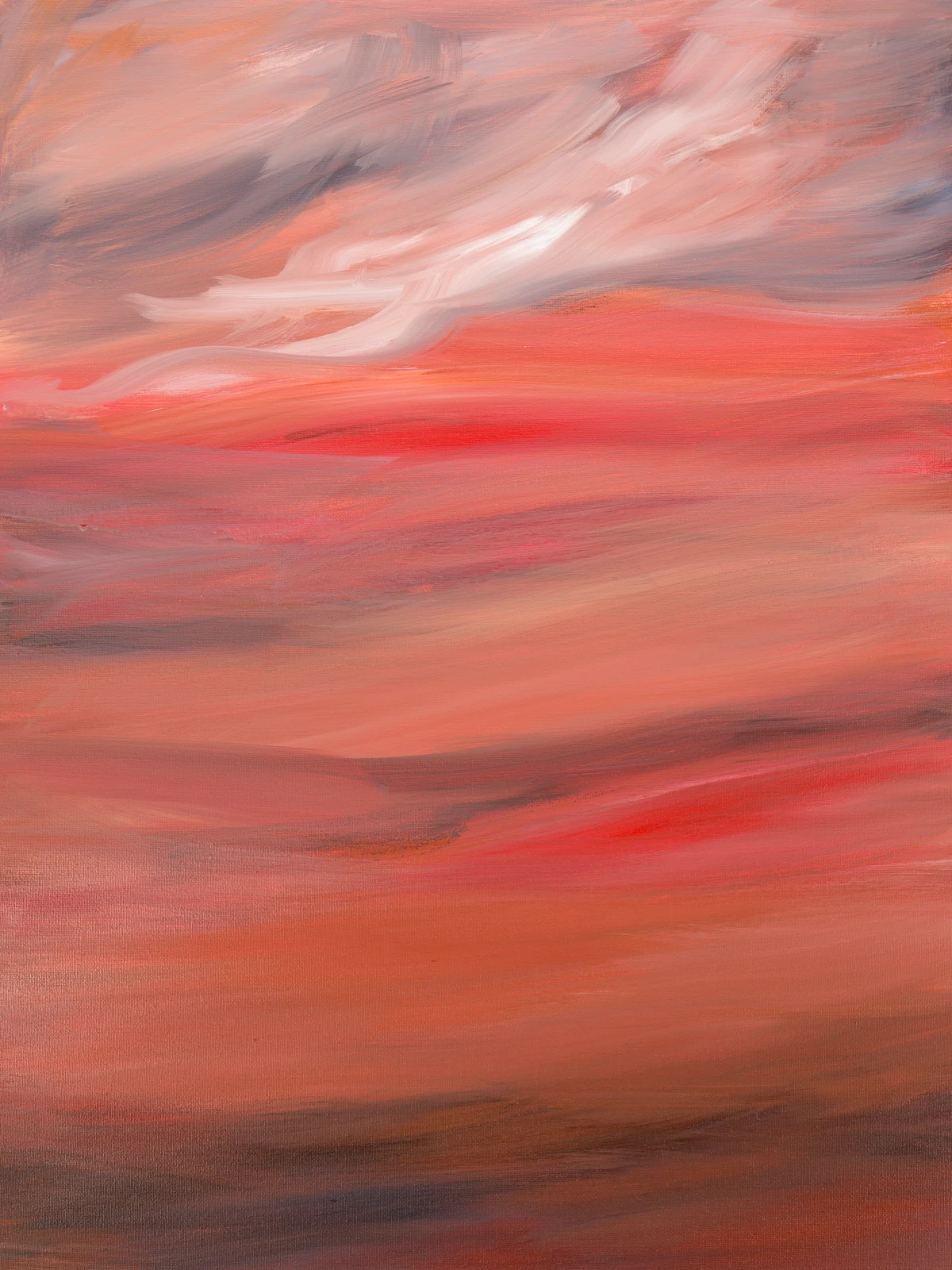
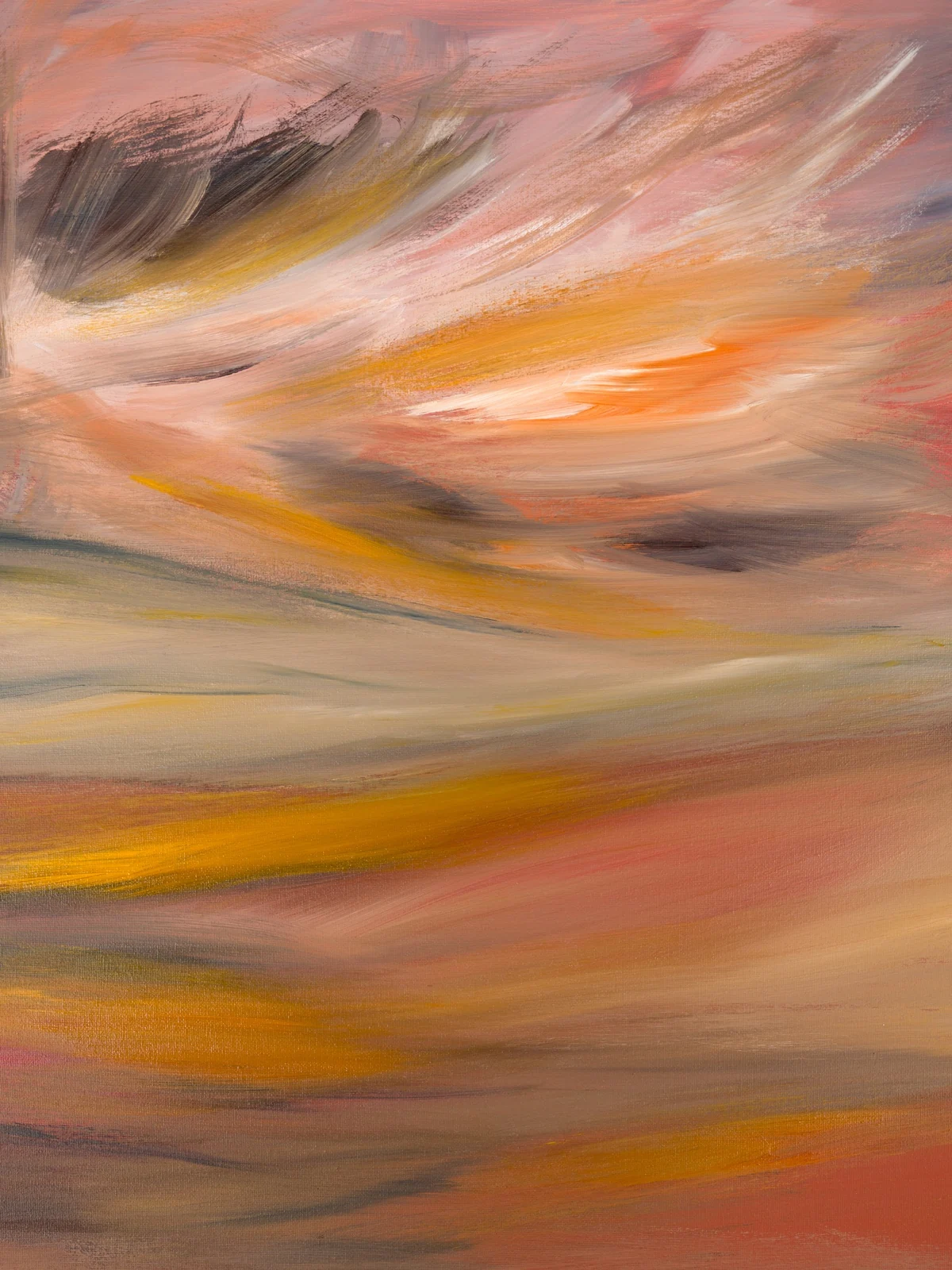
An original painting arrives in one of two ways, depending on the painting you choose. The already stretched paintings arrive stretched on their own frame, ready to hang as they are, or to frame to your taste: the frame is never included. The canvases to be stretched arrive instead as loose, rolled canvas, with no stretcher bars and no frame: it is up to you to decide how to stretch and frame them. The room images give you an idea of how the artwork will look once framed; the frame, however, is your choice.
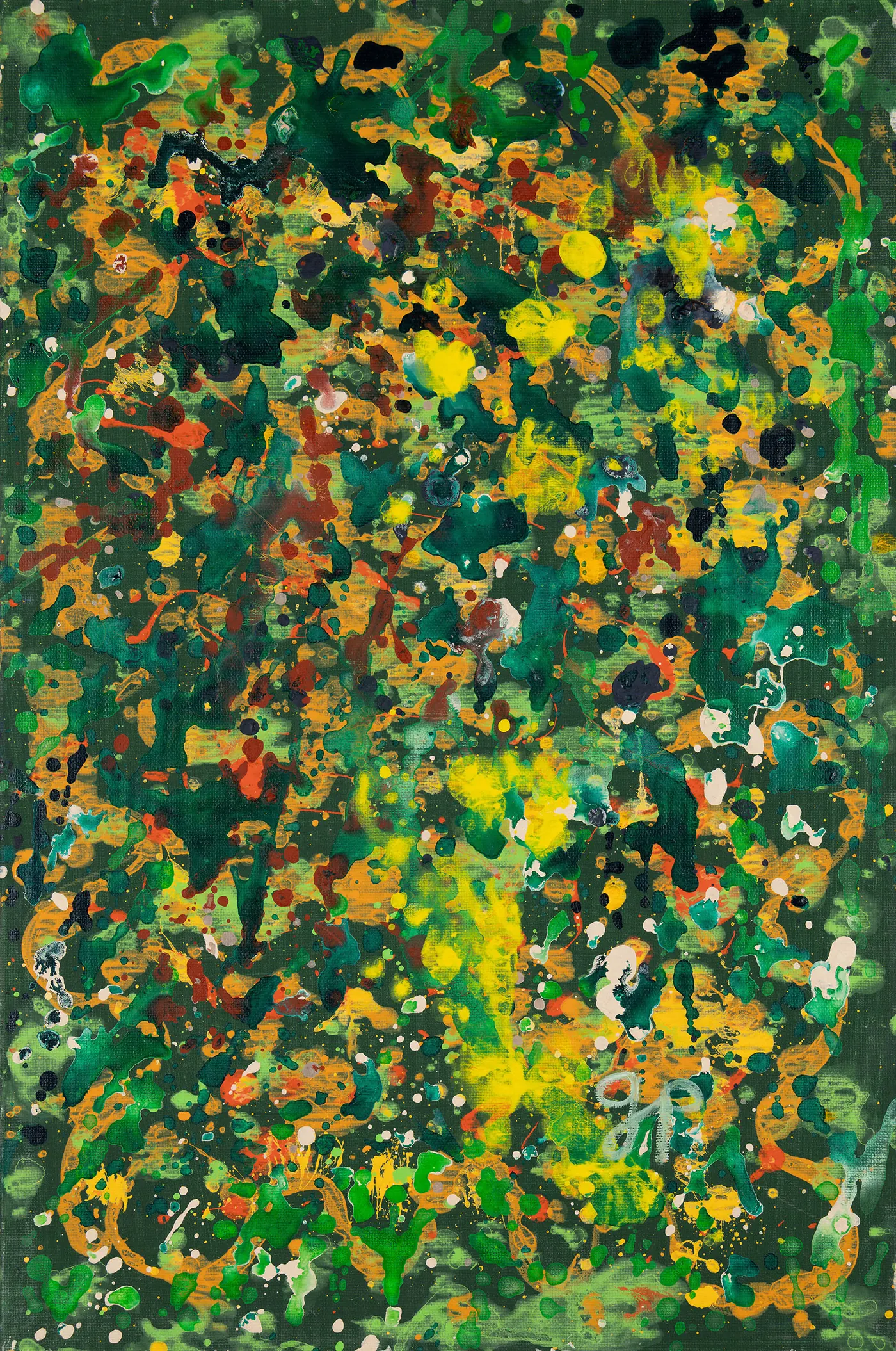
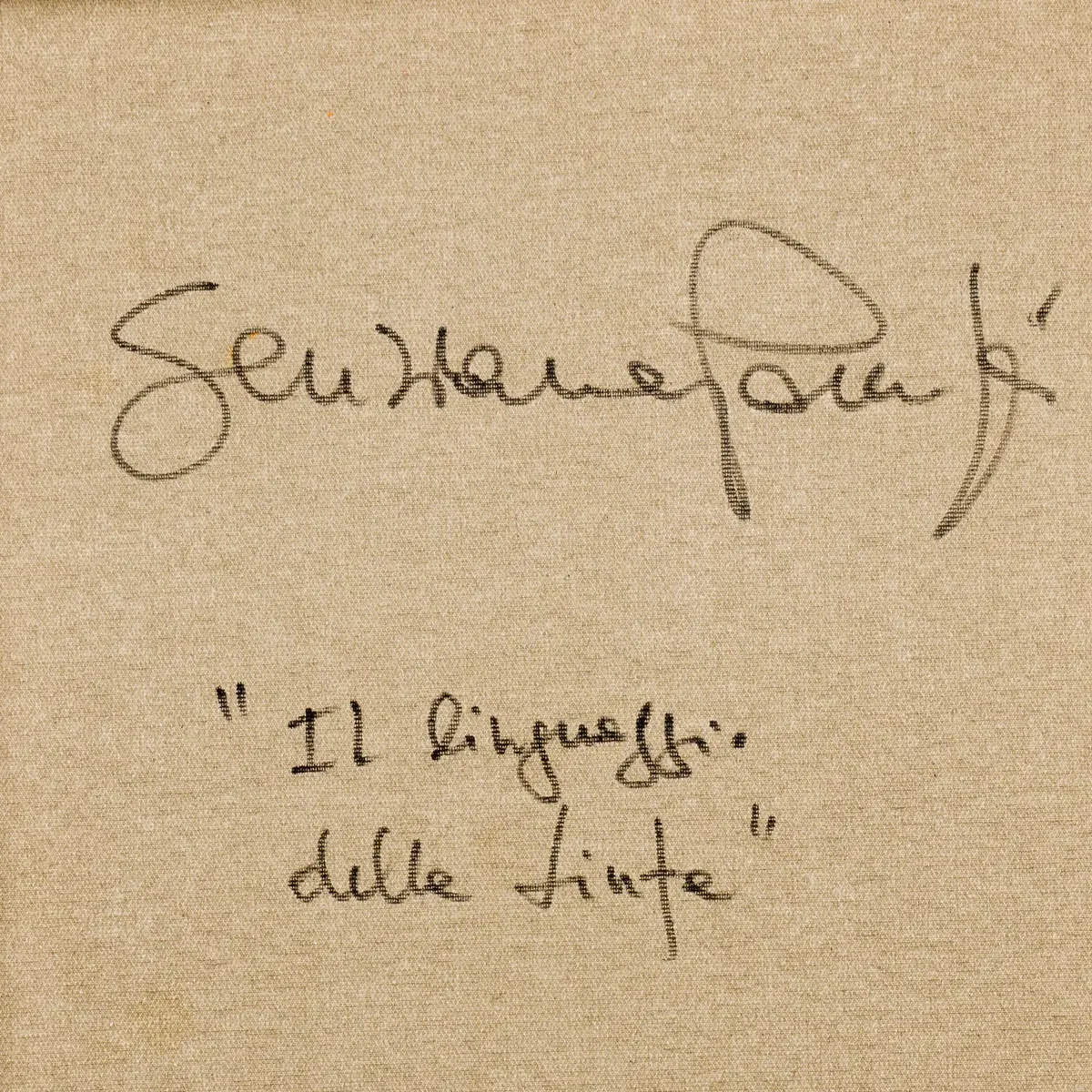
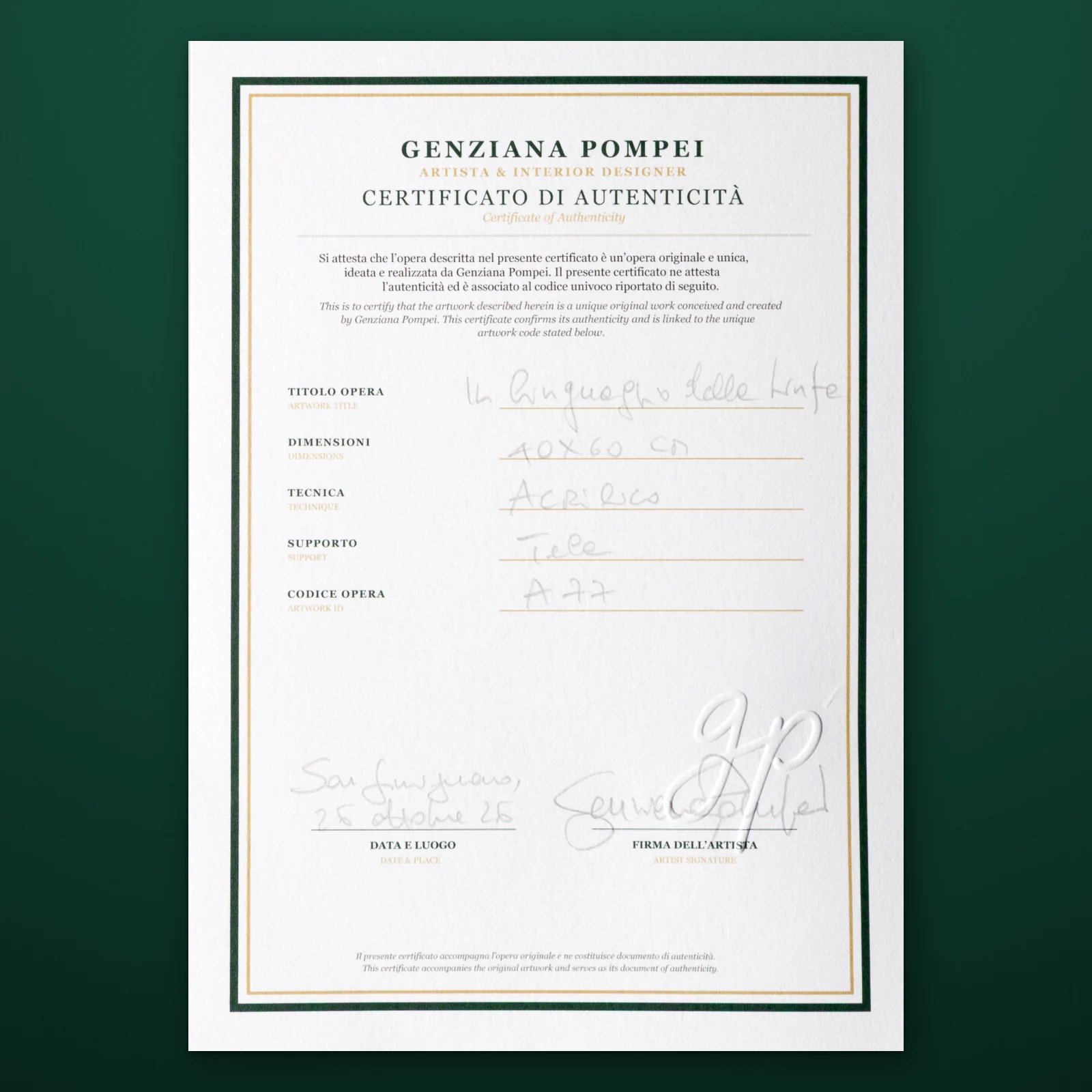
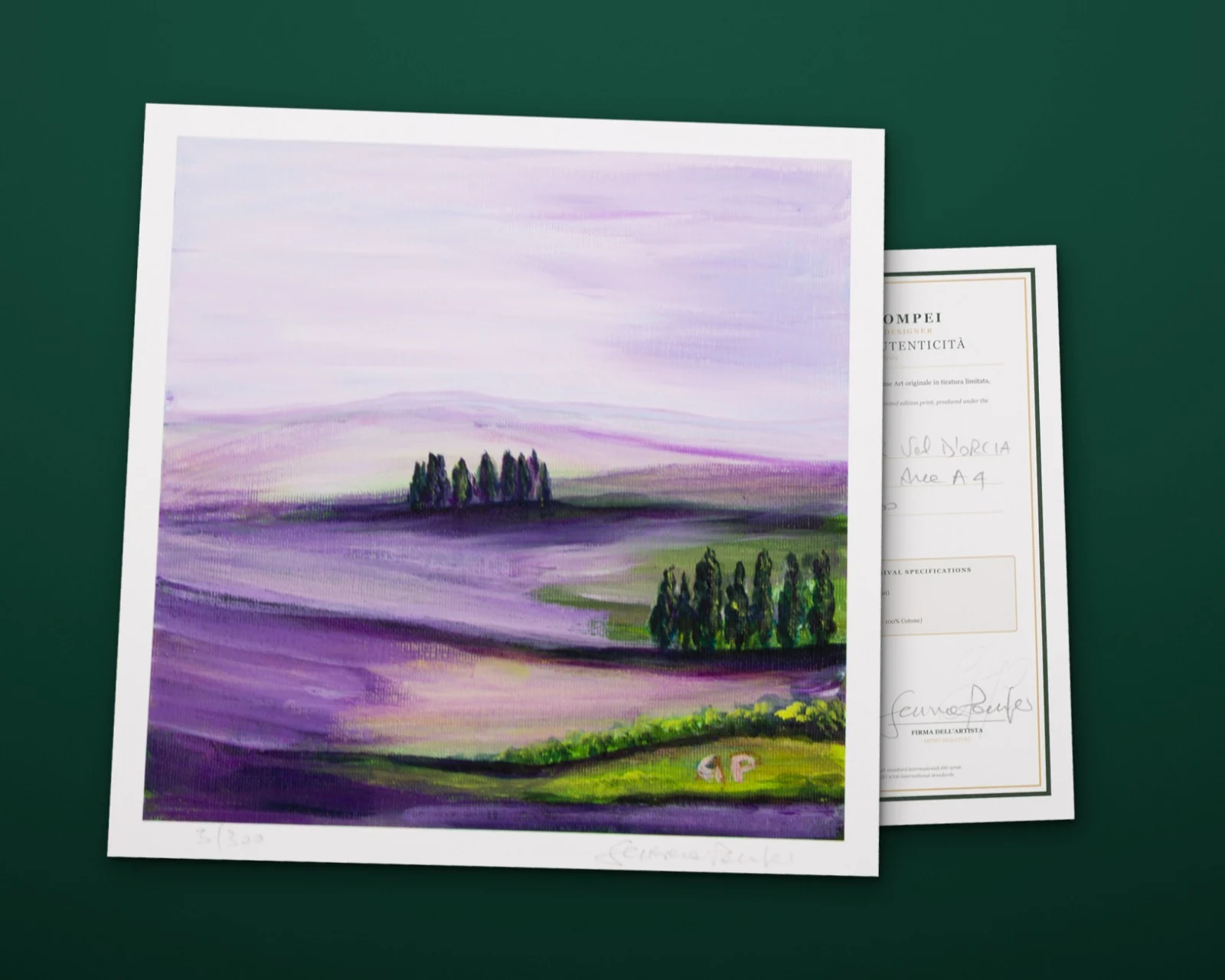
Every painting is signed by Genziana on the front and on the back, and comes with a certificate of authenticity: the fields for title, technique and size are filled in by hand, and the document is dry-stamped with the “gp” mark.
The fine art prints
Every print is created from a file prepared specifically for its size. An artwork rarely has the proportions of an ISO sheet: to respect its shape as much as possible, we have carefully defined a set of standard proportions, and each artwork fits the one closest to its own, with small approximations.
Each size also has the same surface area as the corresponding ISO format. To make the two work together, the image may be cropped very slightly differently from one size to another: a minimal variation that the eye does not notice.
How to read the sizes. The codes A6, A5, A4 and so on therefore indicate the surface area of the sheet, not its dimensions: an A4, for example, is about 625 cm². On the page of each print you always find the exact dimensions, in centimeters and inches, and the surface area. Two prints with the same code have the same surface area and the same price, even if one is wider and the other taller. Only artworks created in ISO proportions have a truly A4, A3 sheet and so on: for these the page shows “ISO format”.
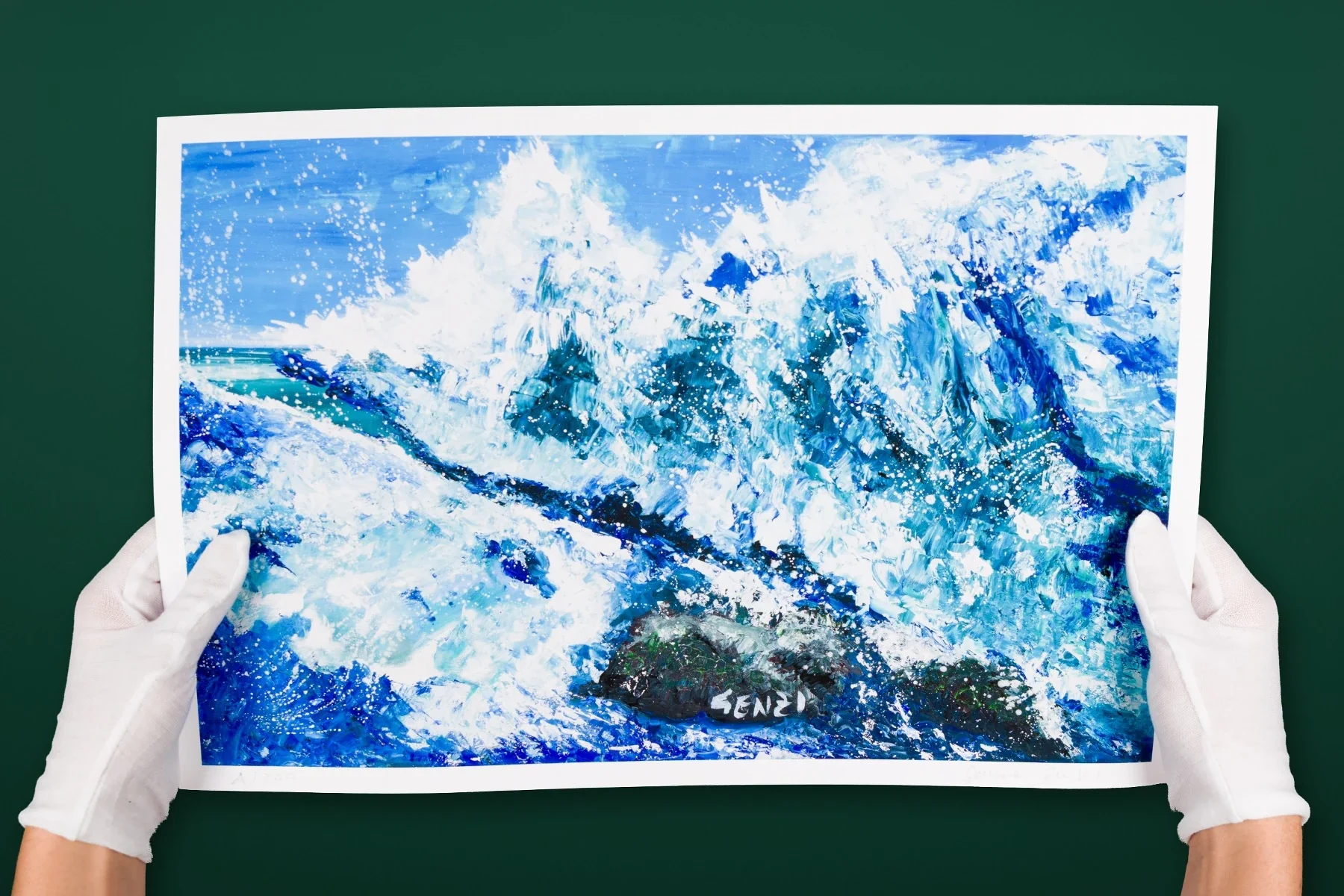
The Canson Infinity Arches 88 cotton paper (310 gsm) is handled only with gloves, so as not to leave marks. After printing, the color needs to rest for at least 24 hours to set. Only then do we cut and trim the edges, with a careful check of every copy to rule out any flaws in paper or color.
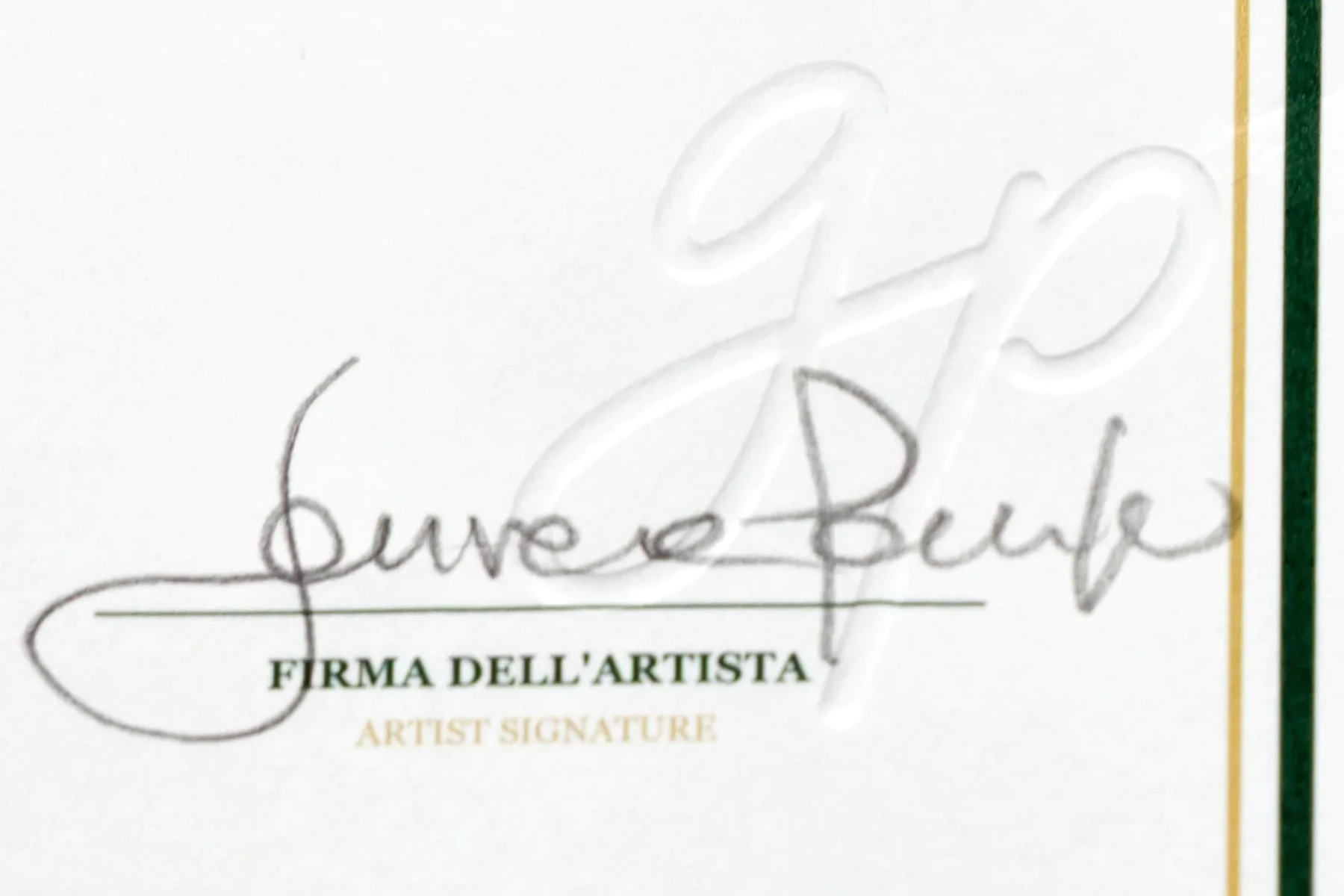
Every print is signed in pencil on the back. Numbered prints (the limited editions) also carry the signature and the edition number on the lower front edge. For numbered prints, the certificate of authenticity, filled in for every copy, is finally dry-stamped with the “gp” logo, slightly overlapping the signature.
The mat will arrive soon: for now we prefer to wait until we can offer it with the same care as everything else.
Art furniture
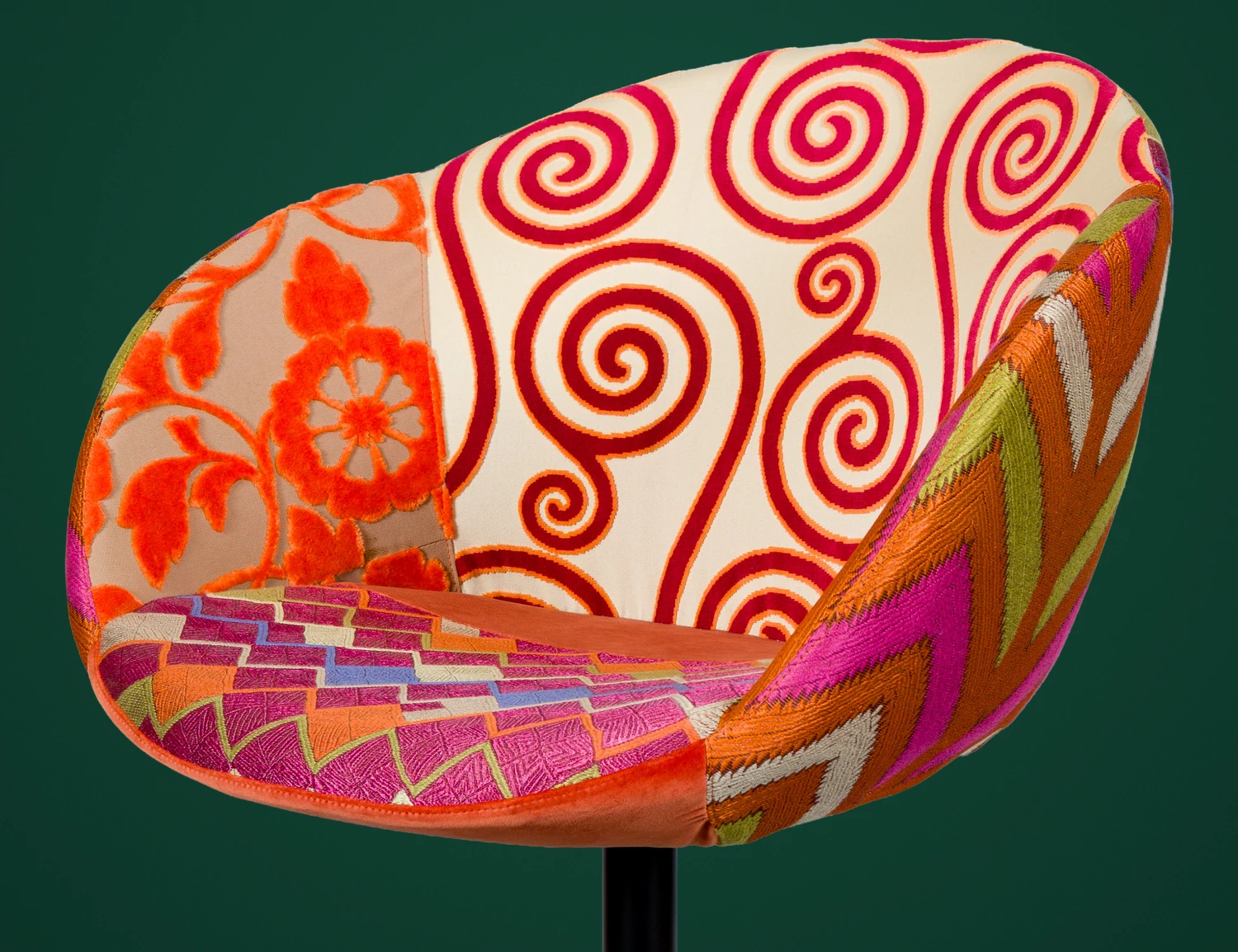
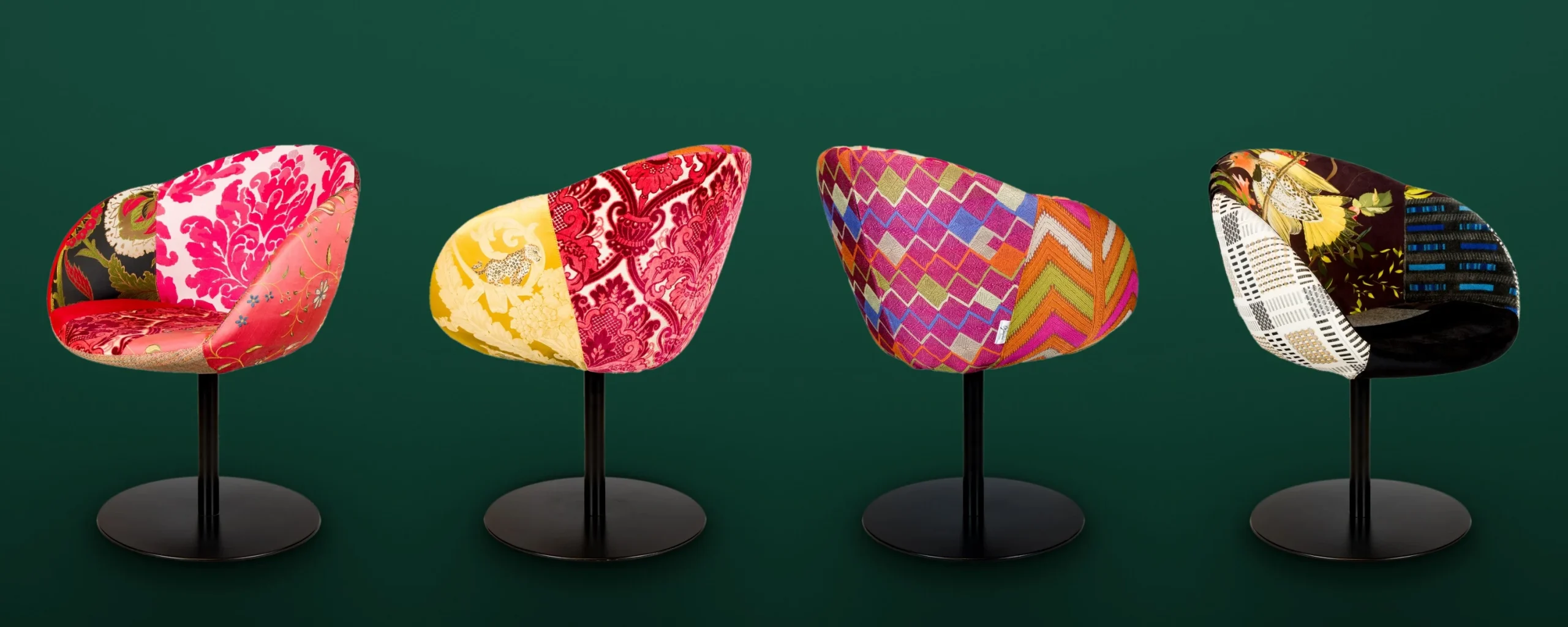
Art furniture pieces start from a new frame, chosen for each piece. Genziana works it by hand, with fine fabrics and materials chosen and matched one by one, the way colors are on a canvas.
The patchwork is composed without a pattern, so every piece is one of a kind: no two armchairs are alike.
Each armchair travels in a wooden crate, insured and tracked, and usually leaves within 3-4 working days.
Armchairs displayed in the studio may show small marks and dents on the edges of the metal base: this is stated on each one’s product page.
Shipping and packaging
Prints do not sit in a warehouse: every copy is produced after the order, and needs time for the colors to set properly on the paper before being packed. That is why shipping leaves within 3 business days.
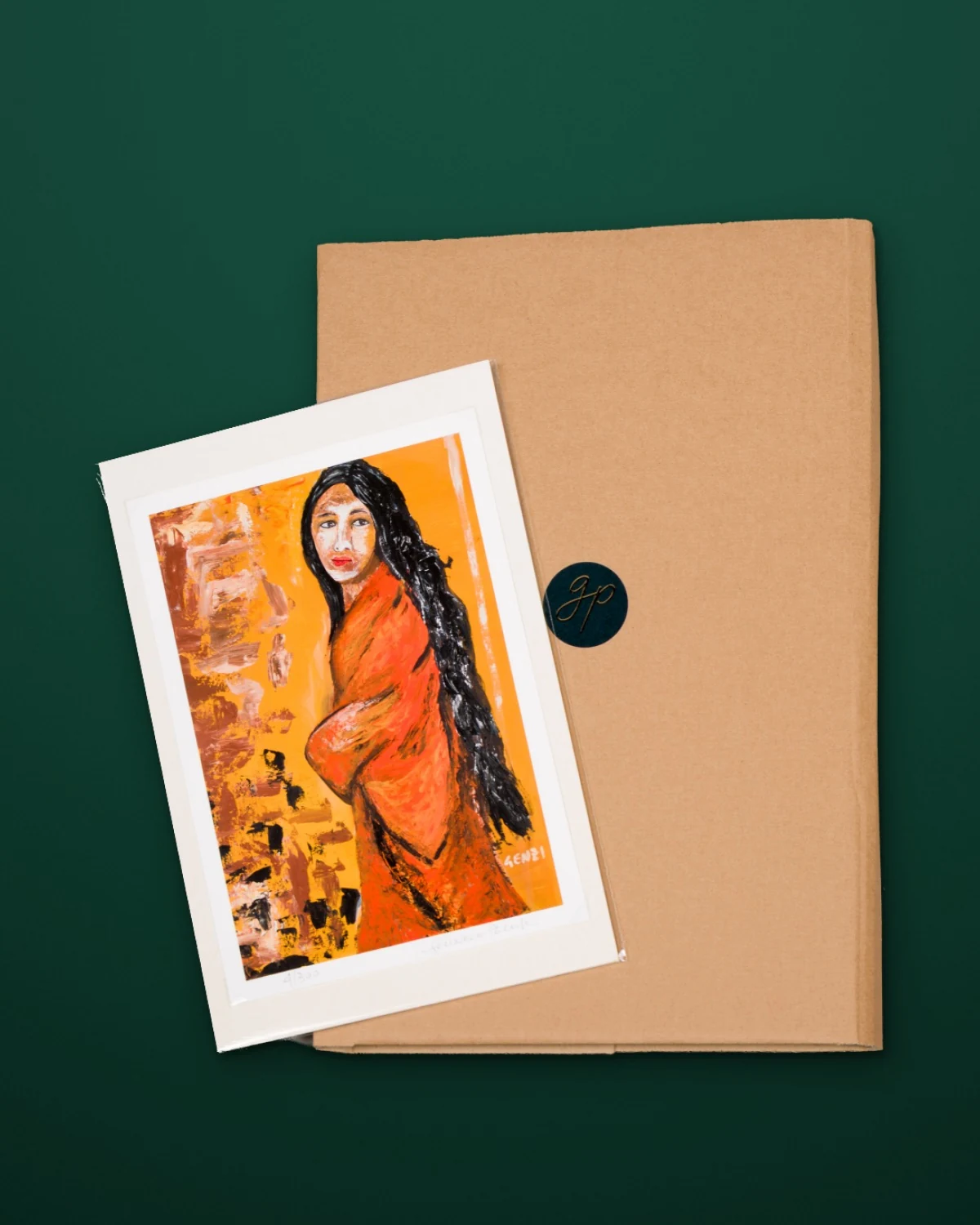
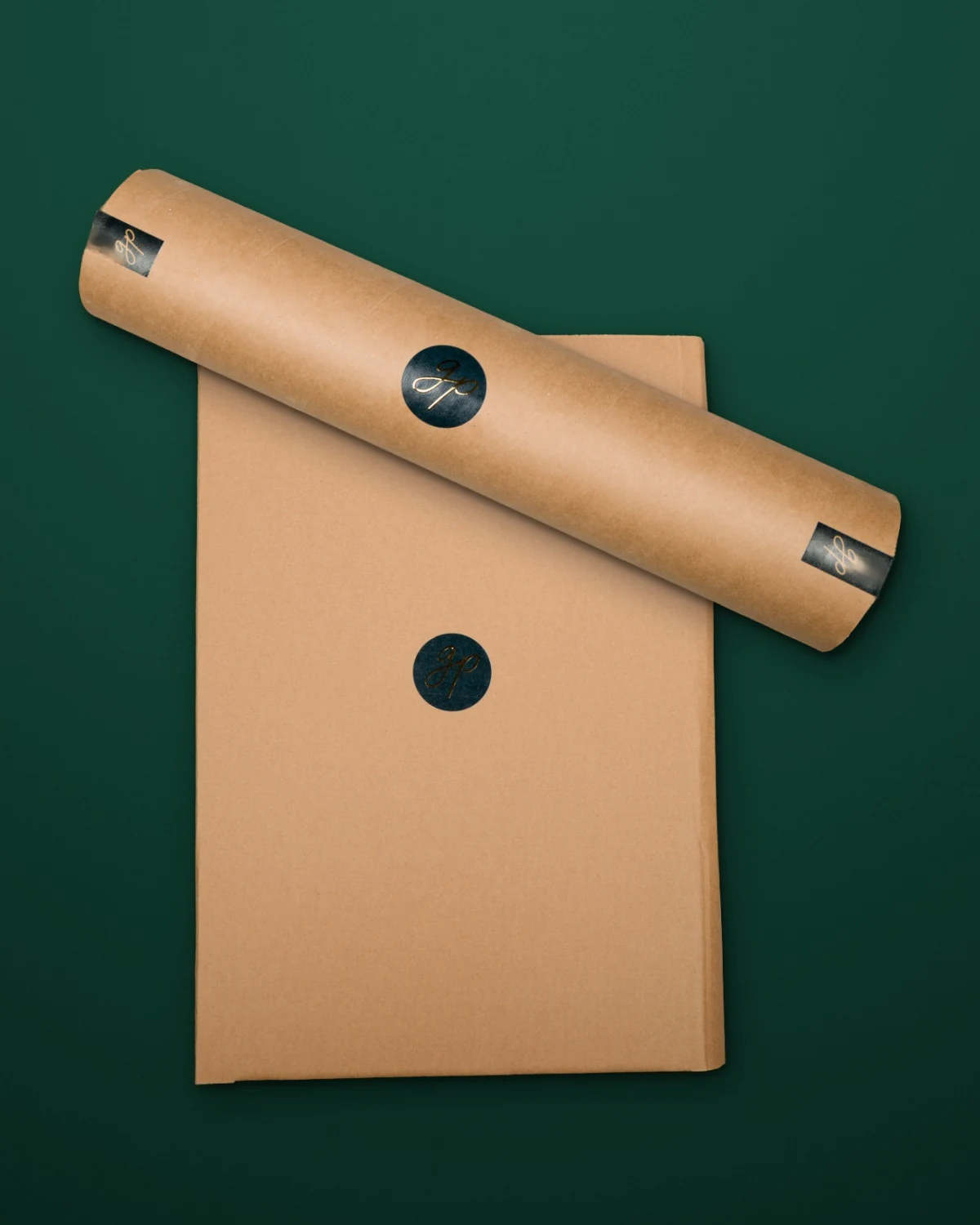
As a rule, prints travel flat: the print is fixed with adhesive corners onto a natural white pH-neutral card, placed in a pH-neutral archival sleeve together with the certificate of authenticity (for numbered prints), and closed with a logo sticker that guarantees its integrity. Everything leaves in rigid cardboard packaging.
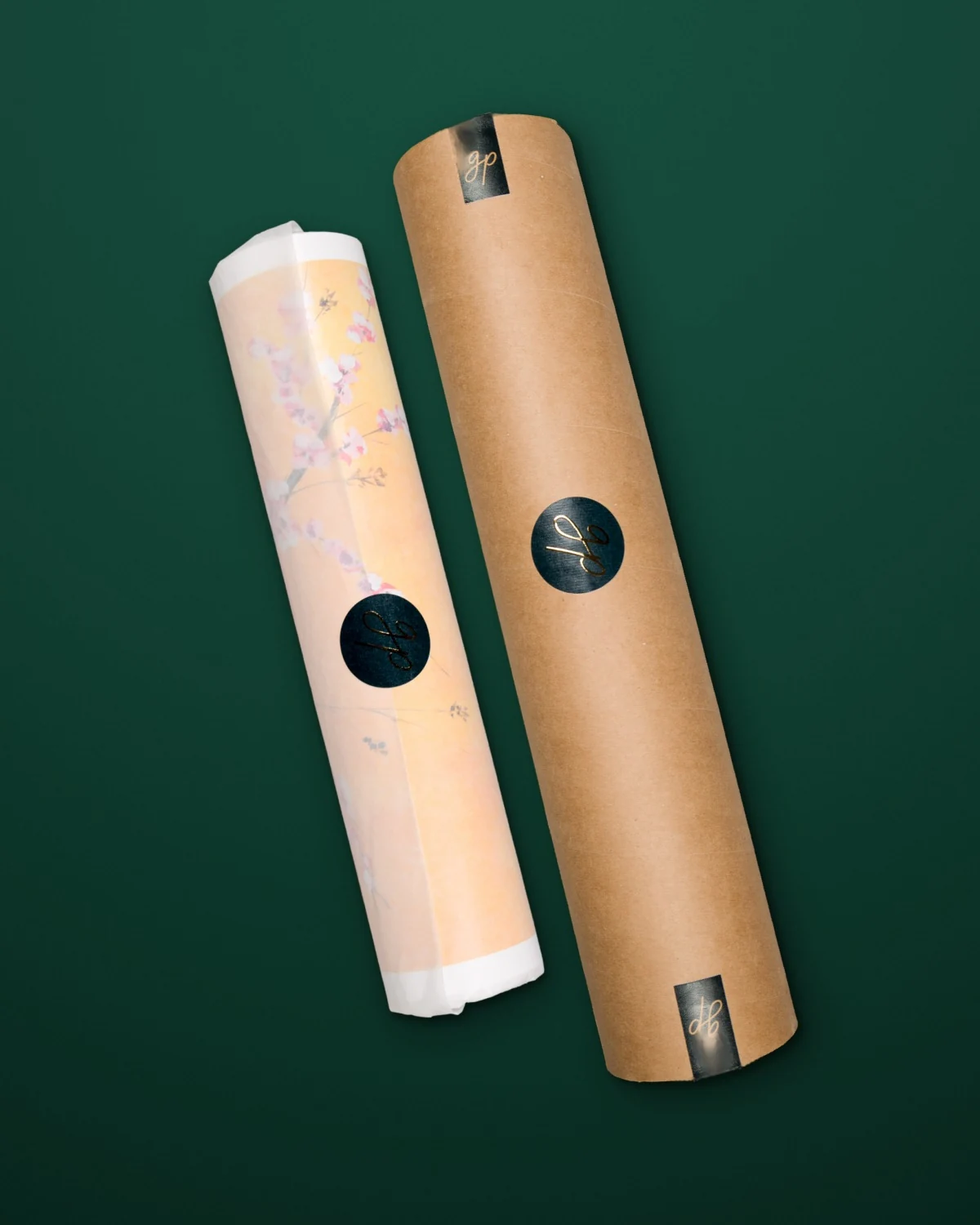
Larger prints and very elongated ones travel rolled instead: the print is wrapped in Canson glassine paper, sealed with the logo, accompanied, for numbered prints, by the certificate and placed in a rigid tube, itself closed with a guarantee seal on each end. For each size, on the artwork page, you will find how it is shipped.
Where would you like to start?